Pages

Showing posts with label windows phone. Show all posts

Monday, December 19, 2011

Nokia Lumia 800 Windows Phone Review

In the first year since Microsoft’s Windows Phone smartphones first launched I’ve tested and reviewed a fair few handsets and I’ve been able to get a good insight into how the operating system translates onto different hardware types.  Of the current crop of phones none have been more hotly anticipated than Nokia’s first outing with Windows Phone, the Lumia 800.

The handset that Nokia sent me was the black model that’s the first time come to market.  The Lumia 800 will soon be available in several colours including a very fetching pale blue.  It’s almost identical in the hardware to their recent MeeGo handset, the N9 and is very fetching too.  The glass expanse on the front that covers almost the entire front of the handset is extremely attractive and the build quality overall is of an extremely high quality.

Internally it’s a little better than other Windows Phones with a 1,400MHz processor, the usual 512Mb of RAM but a healthy 16Gb of storage.  There are also all the features you’d expect in a modern smartphone.  Externally the handsets sports a 3.7 inch AMOLED screen and an 8 MP camera with a Carl Zeiss Lens, usually the preserve of companies such as Sony, a a dual LED flash.

There is little doubt in my mind that the Lumia 800 is a thing of beauty and every bit as desirable as the Apple alternative, if not even more so.  When you actually live with the handsets though is the experience always as pleasurable?  I set about finding out.

The Lumia 800 has had a difficult birth.  When Microsoft and Nokia first announced their strategic partnership early this year there was a great deal of pressure already on the Finnish phone maker.  Their ageing Symbian operating system was failing in the market, their MeeGo platform with Intel was going nowhere and the company was admitting it was in trouble.  Nokia needed Microsoft as much as Microsoft needed Nokia.  This wasn’t a love-in, it was more like a desperate marriage to keep both parties afloat.

Despite a huge marketing campaign surrounding the Lumia 800 rumours have abounded of sluggish sales.  The company has also had to rush out a patch to fix an issue with poor battery life.

I was definitely looking forward to trying the Lumia 800 and have been looking forward to it for ages now, right from when I saw the first leaked images.

It’s a little heavier than some other Windows Phones, at 142g, and there’s not really any indication as to why as there’s not much more here than you’d find anywhere else.  Some people do like a slightly weighty phone though so they can feel it on their person.  It’s far from heavy though and will fit in a shirt pocket without sagging.

The screen is slightly disappointing.  It actually looks small under such a huge expanse of glass.  It’s lacking contrast too with whites looking a bit creamy on medium brightness.  Finally it suffers from the curse of all AMOLED screens with the live tiles in Windows Phone looking a little fuzzy around the edges if you get close.  The camera is a little disappointing too with images looking a bit washed out.  The camera with the Xenon flash on my Own HTC Mozart is far better and even the camera with an LED flash on the new HTC Titan is a big improvement over the Lumia.

I also have concerns about the USB socket.  This sits behind a plastic pop up flap on the top of the handset, next to the headphone jack.  The effect makes for a very clean outer but I can’t escape the nagging feeling that this flap will probably break over time, especially as you need to charge modern smartphones every day.The battery, like the iPhone, is non-removable but this shouldn’t be a problem for most.

It’s in the software though where this handset shines.  The Nokia Drive satnav app is by far the best addition with downloadable maps for most countries in the world available for free.  This enables you to use your phone as an in car or walking satnav without having to worry about maintaining a data connection.  This single app makes the Lumia 800 worth having on its own.  Elsewhere the custom Nokia software is less inspiring and mostly duplicates, though happily doesn’t replace, the in built Windows Phone apps for music and mapping.

So what do I think of the Nokia Lumia 800 Windows Phone overall and am I disappointed?  In short I’m certainly not disappointed and I’m looking forward to using the phone in anger over Christmas and New Year.  It’s s perfect fit in the hand and very comfortable to hold when making calls, something not every Windows Phone is.  The software and hardware package overall is quite simply superb and the inclusion of a protectivive silicon rubber case and a low-profile charger means that for a first Windows Phone from Nokia I believe we can expect some very exciting things from the company going forward.


© Mike Halsey (MVP) for gHacks Technology News | Latest Tech News, Software And Tutorials, 2011. | Permalink |
Add to del.icio.us, digg, facebook, reddit, twitter
Post tags: , , ,


Friday, November 11, 2011

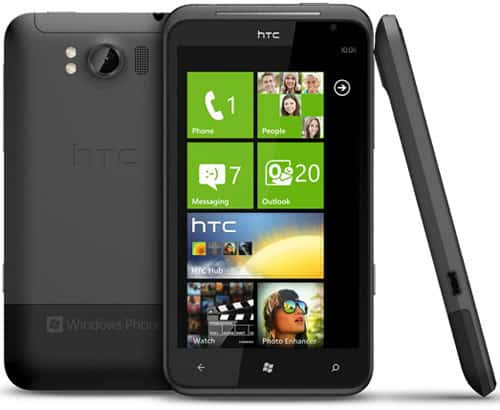
HTC Titan Windows Phone Review

I’ve used a lot of Windows Phone handsets since the platform was first released a year ago so you can imagine that I was a little sceptical about the new HTC Titan because of it’s near 5 inch screen.  Dell’s 5 inch touchscreen device is marketed as a tablet after all and, as the Titan comes with the same 480 by 800 resolution of other Windows Phones would it just be a big and unwieldy phone?

Firstly let’s look at the internals.  There’s a 1.5GHz processor and 512Mb of RAM running the thing, but the specifications are good.  To start with there’s a healthy 16Gb of RAM, though like other Windows Phones it’s non-upgradeable and an excellent 8MP camera with dual-LED flash.  All the extras you’d expect from a modern smartphone are there too with a range of sensors and other gadgets.

That screen too is excellent.  While not quite as bright as other Windows Phones it’s clear and easy to read even in direct sunlight.  Then comes the overall build quality.  I was a bit concerned about the back which has a section at the bottom which looks like it slides out and unclips to provide access to the battery and SIM card slot.  In fact it doesn’t and trying to force it could break the back of the handset.  Instead there’s a small clip that enables the entire back of the phone to come away.  I’m not convinced about how wise this is but the clip is solid and doesn’t look prone to breakage.

The front of the phone is almost all glass from edge to edge and it’s truly luxurious to behold if not hold.  At 131.5mm x 70.7mm x 9.9mm and 160g it’s big and bulky.  It’s a stretch for even my hand to hold and grip firmly and you’ll certainly notice it in a pocket.

You might find it odd then to hear that I absolutely love this phone.  Scaling up the operating system by around 30 or so percent brings new levels of clarity and usability to it.  All of a sudden things like the on-screen keyboard work properly almost all of the time, and everything else becomes much clearer to read and see.  There’s no pixelation at all in fact and the screen is almost crystal sharp.

So who might want the HTC Titan?  Well if you want a phone to keep in your jeans pocket then stay away otherwise you’ll look like you’ve got a stiff leg when you walk around.  There are a great many people for whom this phone is brilliant.  For starters there are people who want a proper PDA replacement.  With the full integration of Office and SkyDrive into Windows Phone with the new update, which is pre-installed, this phone is almost perfect for this role.

There are also people who may have motor or vision problems and who would carry their phone around in a bag anyway.  This is a huge market and if you’re one of these people you can be reassured there’ll be no squinting at this phone to read tiny text.  In fact for these groups of people I believe that the HTC Titan is a great introduction to smartphones and a product that very neatly and effectively fills an important hole in the Windows Phone market.

So overall I can safely say the HTC Titan won’t suit everybody’s needs, but for those people it helps, it will be a tremendous help indeed.


© Mike Halsey (MVP) for gHacks Technology News | Latest Tech News, Software And Tutorials, 2011. | Permalink |
Add to del.icio.us, digg, facebook, reddit, twitter
Post tags: , ,


Sunday, October 30, 2011

How Long Will Your SmartPhone Loyalty Last and Where Might You Jump?

Now that Nokia have launched their new Windows Phones, and cemented their future with Microsoft (at least for the foreseeable future) we’re down to just four major players left in the smartphone space.  Apple with their hugely popular iOS operating system, Google’s free open-source Android, Microsoft’s new-kid on the block Windows Phone and RIM’s could soon be in trouble BBX.  In the last few months we’ve seen both Nokia’s wonderful MeeGO and HP’s equally lovely WebOS bite the dust.

I’ll start this conversation by getting all teary-eyed.  It’s a huge pity that two operating systems as capable as MeeGo and WebOS both seem to be on their way out forever.  We all know that the worldwide smartphone market is easily big enough to support them, but support is the issue as it costs millions for companies to develop and maintain these operating systems.  This is money that Nokia simply don’t have and that HP may not be willing to pay.

But what will this mean for you in the coming years?  For the moment people who have iPhones seem to want the next iPhone when their mobile contract ends, and people who are on Android seem to like it too.  Windows Phone hasn’t yet been around long enough for anyone to reach the end of their first contract using it but RIM’s Blackberry’s also have a loyal following.

There are several main reasons for smartphone loyalty.  These include people being resistant to change and not wanting to learn something new, just getting really comfortable with an operating system and also having paid a lot of money for all those apps you won’t be able to port to a new OS.

But loyalty and favouritism for the operating system isn’t the whole picture.  There is also loyalty to the handset manufacturer.  Many people love Nokia, or HTC because they’ve always had a good experience with their phones.  Many more people like Sony Ericsson (soon to be just Sony) for their gaming integration and so on.

In the end though we all tire of the mundane and want a change occasionally.  This could mean iPhone users jumping ship to Android or Blackberry users jumping ship to Windows Phone.  In short, it could mean anything and there are a whole lot of factors to consider.  There is also the question of if you have loyalty to any one manufacturer and how you feel about this?  I’m very fond of HTC but I’ve owned phones by LG, Sony and others and all have been very good too.

So I’m interested ot ask here what platform you are currently loyal to, if indeed you’re loyal to one at all and what other ones you would consider in the future if you’ve even thought that far ahead?  To start I’ll say I’m very loyal to Windows Phone but, as and when I get bored I’d consider either the iPhone or a BlackBerry.  This would be for several reasons, I’m not happy with the malware problem that still exists on Android and while I don’t like iOS very much, you can’t easily complain about Apple’s hardware.  For BlackBerry, they’d have to produce another handset similar to the Storm, a full touchscreen as I’d never want a full QWERTY keyboard.

So what are your preferences?


© Mike Halsey (MVP) for gHacks Technology News | Latest Tech News, Software And Tutorials, 2011. | Permalink |
Add to del.icio.us, digg, facebook, reddit, twitter
Post tags: , , , , , , , , ,


Thursday, October 27, 2011

How to Secure Windows Phone with a Delayed Password

One of the problems with Windows Phone when the operating system was first released was that while you could secure your phone with a passcode it was either all or nothing.  This meant that you either had to type in a passcode every single time you wanted to do anything on your phone or it never asked you for a password at all.  I know this was of great concern to many people, including myself.  Fortunately with the latest version 7.5 update Microsoft have fixed this issue with the operating now able to turn the passcode on after a period of inactivity.

This is not a widely advertised feature though and there’s no information before, during or after you update your phone to even let you know it exists.  I thought, with my new found ability to get screenshots on my own Windows Phone, that I’d write a short tutorial here for you on how to use this very useful, if not essential, new feature.

1)     Firstly you want to open Settings from the main apps menu

2)     When in the main settings panel, open Lock + Wallpaper

3)     You should now turn on the Password feature for the operating system

4)     Windows Phone will now ask you to enter a passcode, this will always be a numeric value.

5)     When you’re returned to the main Lock + Wallpaper screen, scroll to the very bottom of the screen and tab Require a Password After

6)     You can now select how long a period of time will pass, of up to 30 minutes, before Windows Phone activates the passcode.  Personally I prefer 30 minutes as the others are perhaps a bit short.  With this set you can check your phone regularly without having to worry it will lock you out and require the passcode to be entered every time.  However you will know that if you lose your phone it is very likely that the passcode will automatically turn on to protect your contacts, emails and files.

7)     It’s always a good idea to check the settings have been accepted afterwards.  Here you can see it’s accepted my 30 minute delay on the lock.

I can’t recommend enough that you turn on a passcode for your Windows Phone (or iPhone or Android Phone or Symbian Phone etc.) as we’re all now carrying around increasingly large volumes of data with us.

For example, Windows Phone 7.5 now allows you to easily access any files and documents you may have stored in Microsoft’s SkyDrive cloud storage service.  On mine I have all manner of word processor and spreadsheet documents, some of which contain personal and sensitive information.  It’s extremely useful being able to access these files on the move, but critical to know they’re also secure all of the time.  Even if this feature had been in the previous version of Windows Phone, I never would have used it without a good, strong password on the handset.

It can be royally annoying though when a phone asks you to enter your password every single time you pick it up, especially when you’re only doing something simple such as checking your email or updating Facebook.  With this new feature activated you can rest assured that your phone and data will always be safe… well, after 30 minutes anyway.


© Mike Halsey (MVP) for gHacks Technology News | Latest Tech News, Software And Tutorials, 2011. | Permalink |
Add to del.icio.us, digg, facebook, reddit, twitter
Post tags: , , , ,