Pages

Showing posts with label desktop. Show all posts

Friday, February 10, 2012

Can Windows 8 Be All Things to All People? The Case for Splitting It Up!

Yesterday Microsoft finally announced their plans for Windows 8 running on ARM-designed processors.  The news came with two very interesting pieces of information…

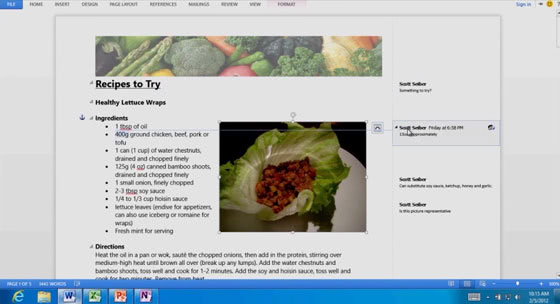
“WOA (Windows on ARM) includes desktop versions of the new Microsoft Word, Excel, PowerPoint, and OneNote. These new Office applications, codenamed ‘Office 15,’ have been significantly architected for both touch and minimized power/resource consumption, while also being fully-featured for consumers and providing complete document compatibility. WOA supports the Windows desktop experience including File Explorer, Internet Explorer 10 for the desktop, and most other intrinsic Windows desktop features—which have been significantly architected for both touch and minimized power/resource consumption.”

Now before I begin I want to talk about some of the things that happened in the last century, namely the birth of the consumer versions of Windows.  This began with Windows 95 which was bold in much the same way as Windows 8 is now because it broke the clearly defined user interface paradigm and went with a new way of working with our desktops.  It turned out that this new way was hugely successful, but this freedom to innovate with Windows came at a cost.  The consumer and business editions of Windows had begun and they stayed on this track until the launch of Windows XP in 2001.

By the end of the 20th century things were not going well for consumer editions of Windows.  The operating system had become a stability nightmare while its business counterpart was doing fine, and clearly the Windows NT kernel, the core of the operating system, was much more stable and secure than anything the consumer team could come up with.  Thus at this point the teams were merged and Windows became a single product for both consumers and businesses alike.  Even this had its problems however with Windows XP, the first outing, being criticised as being too “consumer friendly” and not business-like at all.  The arguments passed however and XP became, and still is, hugely popular on the workplace desktop.
Now the kernel discussion has moved to other platforms with Windows Server and Windows 7 already sharing the same core and rumours abounding that the next major update of the Windows Phone operating system will follow suit and adopt what’s been called MinWin.  This makes complete sense.  If Microsoft have only one kernel across all their products it makes it easier to update, makes cross-device compatibility simpler and much more besides.  This is what Apple has been doing for several years already when they based the first version of iOS on their desktop OS X operating system.

Now however Windows 8 is changing the game, and the problem is tablet computing.  Microsoft are so far behind in the tablet market that if they don’t do something radical, right now, they’ll lose it forever and at that point their market share will inevitably dwindle to the point where they become the next IBM and have to find something else to do.

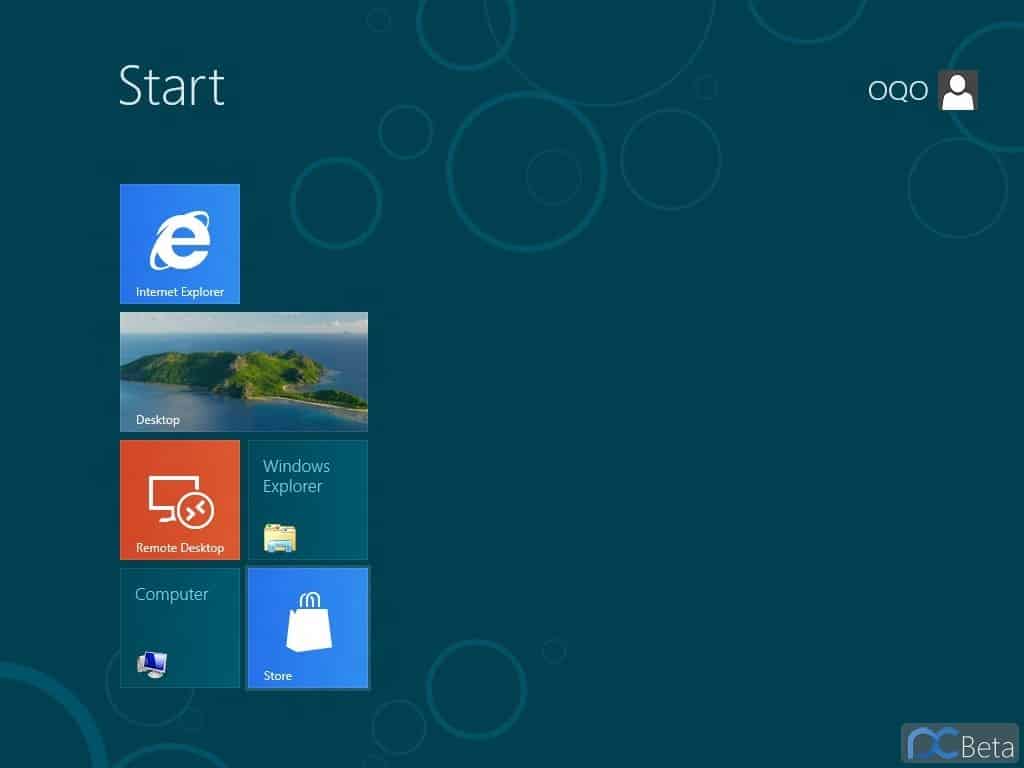
Windows 8 is giving everybody the new Metro tablet interface as the default Windows 8 UI.  Sure, business users will be able to switch it off and revert to the desktop but that’s not the point.  The point is yesterday’s announcement about Windows 8 running on ARM-powered processors.  Here Microsoft have now stated that the desktop will exist on ARM and that the platform will come pre-loaded with versions of the next editions of Word, Excel, PowerPoint and OneNote.  Surely this is great news?  Anybody who wants a Windows tablet that they can use for serious work will now be able to.  The desktop is being modified to work much more effectively with touch and all is going to go brilliantly.

If you detected a hint of sarcasm running through that last paragraph then you’d be right.  I am deeply concerned about the inclusion of the Windows desktop in the ARM version of the operating system.  While its easy to argue that this paves the way for hardware manufacturers to create low-power ARM-based laptops and ultrabooks, the simple fact remains, and Microsoft have confirmed this, that no existing x86 or x64 apps will run on the ARM version of Windows.  The existence of desktop versions of these Office programs won’t even give hardware makers the option to hide the desktop on their devices.

This means, for starters that the most common question asked by people with ARM-powered Windows 8 devices will be “Why won’t my software install on this computer?”  But the ramifications run much deeper than this.  It means, for instance, that Microsoft have pretty much given up, in the short term anyway, of creating any meaningful versions of their Office apps for Metro.  Adobe has shown with Photoshop Touch how powerful touch apps can be, and a Metro implementation of the Ribbon UI, which is already very finger-friendly, could be extremely effective.

But no.  Microsoft have stated “desktop versions” instead, despite the fact that past Windows explorer these people will have nothing else that ever will, or ever can run on their desktop.  The term, ‘frustrating’ will probably come up a lot from these people.

Meanwhile, business users and IT Pros are bemoaning having Metro foisted on them when they’d much rather get used to that at home but still keep the traditional desktop at work.  This doesn’t sound unreasonable on the face of it.  What Microsoft are doing here though is taking Windows 95 too far.  They’re forcing an unwanted consumer interface onto business users, while now at the same time plugging a pointless and useless business interface into consumer devices!

I could have coped with the former but the latter just makes no sense to me.  Thus I believe the time has come to split Windows once again into consumer and business versions, managed by different teams.  It’s a good time to do it too.  The Windows kernel is very well managed and there’s no reason in the world why both versions couldn’t just be features and skins on top of MinWin, much in the way Windows 7 and Windows 8 are already.  We need a clear separation and demarkation between what is a consumer product and what is a business product.

I can understand installing Metro onto some business machines because there are a great many times when a Metro app will work great in the workplace, I’ve seen them demonstrated personally, and for everything else there’s the desktop.  Putting a desktop that won’t run existing Windows programs though, and for which the major software companies are unlikely to ever recode their applications due to the small size of the market they’d be selling into just doesn’t make any sense.  So now Windows has to be split.  There has never, in my view, been a better case for doing it and frankly there’s never been a more appropriate time.


Tuesday, February 7, 2012

On Keeping An Open Mind When It Comes To Windows 8 – A Response

Yesterday Martin wrote up his thoughts and concerns about the forthcoming Windows 8 operating system from Microsoft.  I’ve spent much more time with Windows 8 so far, have given talks about and I’m current writing two books about how to get the best out of it, one for complete novices and another for IT Pros and Enthusiasts.  I thought then that I might be a good person to respond to some of Martin’s concerns and perhaps bring a different perspective to the discussion.

I don’t want you to think though that I will be spouting Microsoft’s official PR line, the company is perfectly capable of doing that on their own and they don’t need me to help them.  What I want to bring to the discussion though are the thoughts from someone who has spent some time with the OS, knows perhaps a bit more about what’s coming than I generally let on  ;)  and understands the different aspects of the OS in some depth.

Many of Martin’s concerns centre around the new dual-interface between the desktop and the Metro UI.  This is a legitimate question about why we either need or should have a dual-interface in an operating system.  I feel that Windows 8 is a transitional OS between the way we’ve been doing things now for around 30 years and the way we’ll be doing them in the future.  Anybody who has spent any time working with a tablet will intuitively use Metro and won’t even think about the fact that they’ve only got one (or two) apps open at a time.  We’ve just gotten used to it.

Martin is quite right though that people often have other things running in the background such as messenger apps, multiple browser tabs and so on.  If you look at the way some tablet operating systems handle these you can get some idea of the direction that we’re going in with Windows 8.  Don’t assume for a moment though that Metro in Windows 8, as seen in the Developer Preview or as expanded in the Consumer Preview (beta) will be anything like Metro when Windows 9 arrives, or even Metro when Windows 8 Service Pack 1 is delivered.  As a UI it’s still a concept, even though it’s roots can be traced back almost a decade ot Windows Media Centre, and as such much is set to change and evolve in the next three years.

So how this multi-application space works in Metro with Windows 8 will be determined by how people and companies write their apps.  We will see a great many different ways of doing things as many imaginative people bring their own ideas and concepts to the Metro UI, and it will be interesting to see where these take us and what Microsoft officially adopt.

Ultimately then we will lose the desktop.  The fact that we’ve been using it for the last thirty years doesn’t mean there isn’t a better way of working.  Metro may not be it, but we have to start somewhere.  I’m not sure how much I’ll use Metro myself but despite having a very uncluttered desktop, the prospect of having an interactive one that is telling me, all in one place, what my latest email is, who’s mentioning me on Twitter, what the forecast is for tomorrow, what my next appointment is, the current currency rate between the £ and the US$ and more is very appealing.

Regards using the desktop, Microsoft have said that, even if it’s just in group policy, you will be able to set the desktop as your default UI.  This will be important for people for whom all their software requires it.  While we’ve seen some very imaginative tablet apps appear such as Adobe Photoshop Touch, it will be several years before top quality professional-grade apps appear for Metro.

Martin also raised concerns about using Metro and the new Windows-orb’less desktop with a mouse and keyboard.  While Microsoft have not announced anything yet, they have said that everything you can do with touch you will be able to do with the mouse and keyboard.  Personally I’m looking forward to seeing what new mouse gestures they offer.  Also don’t forget that very soon we will have monitors and laptops with Kinect sensors in them as well.

Martin is quite right though that as things stand the dual-interface, and how you switch between them and control them, can be confusing.  It’s partly for this reason that one of my new books “Windows 8: Out of the Box” has been commissioned where it probably wouldn’t have been for Windows 7.  On this we’ll just have to see what Microsoft offer us to increase usability and to minimise the learning curve.

So what about the Start Menu?  Microsoft wrote a very long blog post detailing why they were making the changes they were back in October.  I am of the opinion however that the Start Menu should have been dropped when the Windows 7 taskbar was introduced.  These essentially offered us two completely different ways to find and launch programs.  All Microsoft need to do is find a way to control (or bucket) all the extra programs (uninstallers / utilities etc.) that appear in the Start Menu and all new programs should be pinned to the taskbar by default.  For my part, I won’t be sad to see the Start Menu go.

To reassure you Martin there is a great deal more coming for desktop users and IT Pros, but that none of it was finished in time for the Developer Preview.  When the Consumer Preview is released in a couple of weeks we will all see what these features are but Microsoft have promised several hundred small and large features in total still to come.

Let’s be honest that Windows 8, as I said earlier is a transitional OS, much in the way early builds of Apple’s OS X were when the company was moving people off old PowerPC software.  It is probably going to be painful for some, but if there really is a new way of working ahead of us that can genuinely help productivity, usability and most importantly accessibility with computers, then I believe we should embrace it.  For a while though it will have to co-exist with the traditional desktop and there can never be a truly integrated way to do that.


Sunday, January 15, 2012

What might a post-Windows world look like?

We take for granted these days that Microsoft will always provide new versions of Windows and Windows Server, that Google will always provide world-leading search and that many other companies will just be there for us in perpetuity.  After all, look at the big names like Coca Cola, Ford and and more that have been with us for a hundred years or more.  Only when it comes to specific websites such as Facebook do we accept that their candle may burn out quickly.

But the technology market is different, and in the last three years we’ve seen it take on a whole new dimension where Windows is no longer the obvious operating system choice, and where comparisons are increasingly being made with IBM.  On tablets, a market that Microsoft invented back around 2003 they’re going to have a real fight on their hands, and in computing generally it’s no longer clear what devices and form factors we’ll be using in even five or ten years time.  What is obvious however is that the traditional desktop PC is well and truly on its way out.  Lastly new operating systems such as iOS, Android and WebOS have blown away the notion that people will resist a learning curve on new devices.  So what would the world be like if Microsoft stopped making Windows desktop and server products?

First of all it’s not very likely, Microsoft would probably drop Windows products last of all with their expensive research and development centres and other products such as Xbox falling by the wayside first, so there’s no need to worry in the short term.  Windows 8 is a big gamble though and if it fails then Microsoft will either have to backtrack with Windows 9, pull an immensely impressive rabbit out of their hat or face the consequences of poor decision-making.

There has already been talk that Google would like to bring Android to the desktop.  HP said the same of WebOS, which they are still developing or at least maintaining, and could put extra resources back into quickly.  Ubuntu Linux is now at least as friendly as Windows XP was, only the lack of big name software for the platform is holding it back now and Apple’s OS X is becoming more like iOS with every release.  So it’s already clear that there’s plenty of choice.

We might also expect an open-source upstart operating system to appear too and it might even be a reinvigorated WebOS.  Companies such as the Mozilla Foundation might see an opportunity as their Firefox browser begins to fade in popularity, and this is just one of several places where a new operating system might emerge.

In the business space, some of the GNU/Linux companies including Red Hat, might jump in with versions that will run Windows programs on the desktop.  This isn’t new and has already been done with operating systems such as Lindows (later renamed Linspire).  This product still exists today and could prove popular with businesses if Windows 8 and Windows 9 fail to deliver the working experience that they need.

Again it’s very unlikely that Microsoft will cease development of Windows in the next twenty years at least.  If they’d have done it even five years ago there would have been almost no alternatives to choose from.  Should they do it now though businesses and consumers would probably just shrug their shoulders and quietly move on to the next big thing.


Thursday, October 20, 2011

I’m a Desktop, What are you?

I’m becoming increasingly confused by the whole computing market with all manner of new and, relatively, affordable form factors coming to market.  There was a day not that long ago when you had a choice, Desktop PC or Laptop, indeed even laptops were commonly out of the reach of most people and it’s only relatively recently that they’ve become affordable.

Now however we have more types of computing devices than it’s possible to shake a stick at, and one thing is becoming clear, the good old desktop PC is becoming sidelined.  I wanted to ask you all, which is quite ironic given Martin’s post of earlier today, what your opinion is of these devices and what you think of them generally.

The main computing devices we now have include desktops, all-in-ones, desktop replacement laptops, everyday laptops, ultraportables, convertible tablets and traditional tablets.  In fact it’s possible within all these types not just to get what is probably the perfect form-factor for you, but also something that fits perfectly with the aesthetics of where it will go.

To kick off the discussion I’ll start with my own thoughts on my home and home office.  I have a desk in my living room with a desktop PC on it, as many of you will have too.  It is my aim to replace this with an all-in-one PC before too long.  The barrier here for me is that my desktop has a graphics card with the grunt to properly run modern games like Battlefield 3 and all-in-ones often compromise on gaming ability.  I also have a laptop, a desktop replacement Dell which I use for work in my home office upstairs.  This is a big, heavy machine and hardly portable.  It does offer me the storage and power to be a true desktop replacement however in every sense of the word, rather than some of the weedier desktop replacement machines that really don’t offer a viable alternative for you.

I also own two tablets, a Windows 7 ExoPC and an HP TouchPad.  The ExoPC is now used only for work and presentations and the TouchPad is for lounging about on the sofa occasionally when I’m tired.

I have had a couple of Samsung ultraportables on test though, and I’m very happy with the form factor.  These new breed of ultraportables, pioneered by the Macbook Air, are sexy enough to suit the modern living room while small and light enough not to get in the way.  This is important for a laptop as I doubt many people really want a big grey block in front of them when they’re watching the evening news.

If I had to pick one though it still comes back to the traditional desktop for me as this is the only form factor that really offers me the flexibility I need in terms of hardware and storage.  Much as I want to banish the desktop from my living room forever, I just don’t feel that all-in-ones are there yet in terms of true power and flexibility.

So what’s your preference?  Are you a desktop person or a laptop guy?  Do you prefer all-in-ones and why?  Do you have an ultraportable, or do you want one to replace what you have?  Have you indeed banished your computer upstairs forever and it’s tablet all the way in your main living space?

In short, what is your perfect computing device and why is that?


© Mike Halsey (MVP) for gHacks Technology News | Latest Tech News, Software And Tutorials, 2011. | Permalink |
Add to del.icio.us, digg, facebook, reddit, twitter
Post tags: , , , ,


Saturday, October 8, 2011

Sort Your Desktop Toolbar By Name

I do not have any program shortcuts on my desktop, only a few text, Excel and Word documents that I like to have in reach whenever I need them. I have also added a Desktop toolbar to my Windows 7 taskbar to access the files when windows are displayed on the desktop that hide the icons underneath them.

If you add the default Desktop toolbar, you get a seemingly random list of all shortcuts and files that are currently on the desktop. There is furthermore no sorting option available, which can be a problem if you have many items on the desktop as you need to look through all of the listing to find the file or shortcut you are looking for.

sorted desktop toolbar file list

There is however an option to sort the desktop toolbar listing by name. This is done the following way:

Right-click on a blank spot on the taskbar and select Toolbars > New Toolbar from the menu. You now need to select the desktop folder in your user profile folder, and not the special folder desktop. You find that folder under C:\Users\username\Desktop. Pick that folder and it should appear on the Windows taskbar.

All that is left to do now is to left-click on the arrow next to the desktop listing to bring up the file listing. You will notice that it appears unsorted.

Right-click any file listed there and select Sort by name from the context menu to sort the file listing alphabetically. Alphabetical access should speed up the recognition and execution of particular shortcuts and files stored on the Windows desktop.

I have tested this method under Windows 7 where it worked fine. It is likely that it will work under Windows Vista and maybe even Windows XP. Please let me know if you have tested it under those operating systems so that I can update the guide accordingly.

Have you activated the desktop toolbar, or any other toolbar for that matter, on your Microsoft Windows system?


© Martin Brinkmann for gHacks Technology News | Latest Tech News, Software And Tutorials, 2011. | Permalink |
Add to del.icio.us, digg, facebook, reddit, twitter
Post tags: , , , ,