Pages

Showing posts with label advertisement. Show all posts

Friday, January 20, 2012

Too Many Ads Above The Fold Are Bad, Says Google

Advertisements are what keeps many of the sites going on the Internet, including the site you are currently reading. As a user, I do understand that too many ads, or ads in the wrong position, or ads that are highly distracting, reduce the user experience. While I rarely stumble upon sites anymore that have their pages plastered with ads so that it becomes difficulty to find the regular content, I have to say that I welcome the change that Google just announced.

The company basically stated that an algorithmic change was launched that analyzes the ad to content ratio above the fold. Sites that do not have much content above the fold can be affected by this change, according to Google. What does affected mean exactly? They are pushed down in the search results in favor of sites that have a better user experience.

Sites that display ads to a normal degree are not affected by the change.

I personally have two issues with the announcement.

Parameters

Google did not provide information about the parameters that they look at. What’s missing?

  • The definition of what the company considers to be an ad
  • What Google considers to be a normal ad ratio above the fold
  • The screen resolutions they use to calculate that ad to content ratio
  • If popup ads or interstitial ads are also considered by the change

This leaves webmasters again with the nagging feeling that they may be affected by the change, even though they are likely not.

Not everyone is equal

The second aspect weights more heavily in my eyes. Take a look at the following screenshot and let me know if you would consider this a bad ad to content ratio on the page.
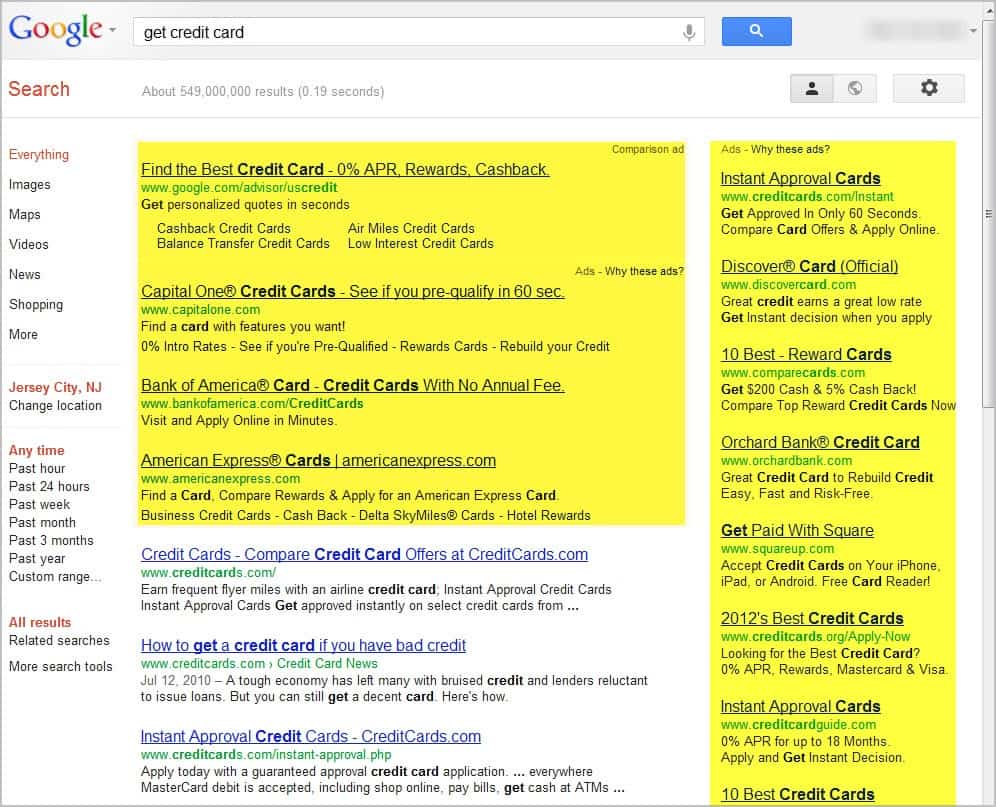
google search ads

Please note that this screenshot shows a 1000 to 800 resolution, and that your experience may differ depending on a number of factors.

And now read Matt Cutts’ announcement again:

If you click on a website and the part of the website you see first either doesn’t have a lot of visible content above-the-fold or dedicates a large fraction of the site’s initial screen real estate to ads, that’s not a very good user experience

Is Matt saying that Google Search is not offering a good user experience? I think he does. Lets discuss in the comments.


Monday, December 12, 2011

Adblock Plus To Allow Acceptable Ads

A new version of the popular adblocking extension Adblock Plus will be released tomorrow for the Firefox web browser. Adblock Plus 2.0 is not only a huge jump in version from version 1.3.10 that is currently offered on Mozilla’s add-on repository, but offers also a fundamental change in program functionality.

Back in October we ran a story about the founding of Eyos GMBH, the new parent company for Adblock Plus that was founded by Wladimir Palant and Till Faida. And with the company came the idea to change the behavior of Adblock Plus. The managing directors back then mentioned that they had plans to fix the web for both web publishers and users.

Their decision to allow unobtrusive ads to pass through the filter was backed by a user study were 75% of all users stated that they were using an adblocker primarily to block annoying ads on the web, and that they would not mind if unobtrusive ads were displayed to them on websites.

Adblock Plus 2.0 for Firefox will introduce the concept of acceptable ads to all Firefox users who upgrade to or install the new version of the add-on. Users will see a notification once they install or update to the new version.

non intrusive advertising

The notification states that Adblock Plus has been configured to allow non-intrusive advertising. Links lead to a help page with additional information about the new feature and the configuration were the feature can be turned off. The page explains the reason for the move (supporting websites that rely on advertising, forcing websites who use annoying ads to think about it), that users can disable the acceptable ads feature if they so desire, and what the developers consider acceptable ads.

According to their information, acceptable ads are static advertisements (no animations or sounds), preferably text only and use at most one script to avoid delays in page loading times.

A list of acceptable ad providers and websites is available here. The only big name in the list is Google, the remaining filters refer to ads on specific sites (mostly German based). The page states that Adblock Plus has agreements with “some websites and advertisers”. It is not clear how those agreements look like.

Adblock Plus users can disable the feature in the add-on’s Filter options.

allow non intrusive advertising

I have to admit that I like the move as a webmaster. Why? Because I earn my living from this website with ads on the site. If everyone would block the ads on this site, I would be working in a 9 to 5 job with little or maybe no time to update and maintain this website.

Users still have the option to turn off the the exception list if the want to continue blocking all ads on the Internet.
The new version for Firefox is said to be released tomorrow. The Chrome version will receive an update in the coming months.

What’s your take on the move? Let me know in the comments.


© Martin Brinkmann for gHacks Technology News | Latest Tech News, Software And Tutorials, 2011. | Permalink |
Add to del.icio.us, digg, facebook, reddit, twitter
Post tags: , , ,


Thursday, December 8, 2011

Twitter Tweets About Redesign, Forgets To Mention Ads

Twitter today announced redesigns for all platforms the social messaging site is offered for. This includes the web version for desktop PCs as well as clients for Android and iOS systems. Twitter users interested in the changes can head over to the Fly page on Twitter for a first impression of the things to come. It is interesting to note that mobile clients for Android and iPhone are already offered, while the iPad version and desktop versions are said to roll out in the coming months.

The new Twitter web design has seen big changes. The homepage displays a left sidebar now with information about the Twitter user, follow suggestions and trends, and the main area that displays with the most recent tweets.

twitter redesign

A new tab menu with four new tabs has been introduced that looks and behaves the same on all platforms that Twitter is available on.

The four new tabs Home, Connect, Discover and Me are explained on the Fly page, only this much:

  • Home: Tweets from the people a user follows
  • Connect: Displays conversation details, e.g. who followed you or retweeted a message.
  • Discover: Personalized information based on the user’s location, followed users and world news.
  • Me: The new profile section on Twitter.

A video has been created that demonstrates the capabilities of the new Twitter.

Not every Twitter users seems to be happy with the redesign. Especially the placement of direct messages under the Me tab makes it highly uncomfortable to reach. Even more concerning than this design decision are ads that have been spotted by users such as Abraham Vegh.

twitter ads

This particular ad appeared as an intermediary page on one of the mobile clients. I cannot really say if this is something that all users will see or if it is restricted to particular users, countries, platforms or other parameters.

If you are using the new Twitter mobile clients, have ads been displayed to you? Let us know more about if if they did. (via)

Update: Abraham who posted the original tweet has now posted a correction stating that it “*may* have not been a Twitter-imposed ad”.

Have you seen ads on the new mobile Twitter clients?


© Martin Brinkmann for gHacks Technology News | Latest Tech News, Software And Tutorials, 2011. | Permalink |
Add to del.icio.us, digg, facebook, reddit, twitter
Post tags: ,


Thursday, November 24, 2011

Google Showing Ads In Chrome Browser, Is This The Beginning Of The End?

Internet users are accustomed to seeing ads on Internet pages. One of the most prominent advertisement schemes used these days is Google Adsense which is available for websites, searches on websites and for mobile devices. Adword ads dominate the Google search result pages, and other Google properties are also displaying their fair share of ads.

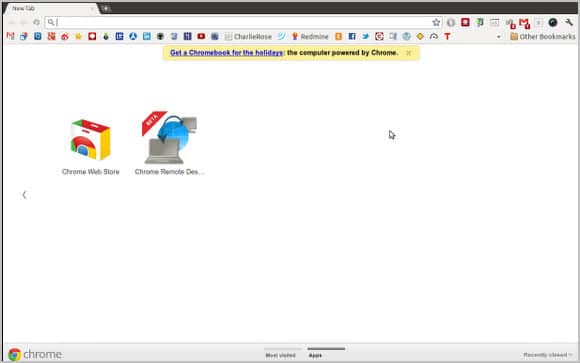
Salimane Adjao Moustapha recently posted a photo of another place where Google (seemingly) has started to display ads: The Chrome browser. The screenshot shows a new tab page of the Chrome browser. The Apps section is open and at the top of it is an ad for Google’s own Chromebook. It states: Get a Chromebook for the holidays: the computer powered by Chrome.

The first part of the ad is underlined. It is not clear where it leads to as it is not revealed by Salimane, and I was not able to reproduce it.

google chrome ads

The post on Google Plus sums up all the different opinions about the ad in Chrome. Some say it is Google’s right to display ads because the browser is free. Others that they should not do so without giving the user control over the ads. A third group is suggesting to switch to Firefox or Chromium. And a last group is angry but not angry enough to switch just yet. It would not make much sense either at the time considering that the majority may not have seen ads in Chrome yet.

I’d like to know your opinion about ads in web browsers. Do you think it is ok for Google to display ads in the browser, especially if it is for other company products? Or would you say that ads in a browser are a no-go, regardless of what they promote?

My personal opinion on the matter is that Chrome has turned adware if Google makes the decision to display these kind of ads to all Chrome users. It does not really matter if the ads promote Google products or third party products, it is still an ad.


© Martin Brinkmann for gHacks Technology News | Latest Tech News, Software And Tutorials, 2011. | Permalink |
Add to del.icio.us, digg, facebook, reddit, twitter
Post tags: , ,


Wednesday, October 26, 2011

Visa, MasterCard Plan to link Credit Card Purchases And Online Marketing

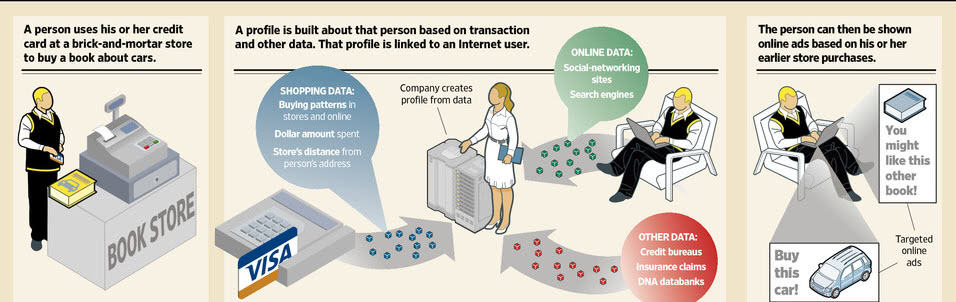
If you thought it could not get worse with all the tracking and personalization on the Internet, then you have just been proven wrong. According to The Wall Street Journal and other sources, both Visa and MasterCard are planning to tie credit card purchases with personalized online advertisement. What does it mean? You recently bought a new BMW? Expect to see car insurance ads! You are a regular customer at Mc Donalds, Burger King or Kentucky Fried Chicken? Expect weight loss ads to dominate your ad experience on the Internet. Paid your membership to that online dating site with your credit card? See mail order bride ads.

Linking “real-world” purchases to online users is one of the holy grails of Internet marketing. Current advertising companies are already able to link online activity to advertisements. Linking offline purchases on the other hand would push behavioral targeting to another level.

visa online advertisement

Both credit card companies interestingly enough confirmed that they are exploring ways of using transactional data for targeted online advertisements. A Visa patent application in April for instance revealed plans to use personal details to create online profiles for ad targeting, with personal details taken from a variety of sources including “information from social network websites, information from credit bureaus, information from search engines, information about insurance claims, information from DNA databanks”.

A Master Card spokesman stated that the company “doesn’t collect card-holders’ names or contact information in transactions it processes”, and that it therefor “doesn’t connect an individual’s Web-surfing activity to their specific cardholder transaction data or provide outside companies with individuals’ transaction data”.

According to the Wall Street Journal article, both companies said that the plans are preliminary. Master Card and Visa are not the only two credit card processing companies that use the billions of credit card transactions for marketing. Most companies disclose in their privacy policies that they may share personal information with third party companies.

Master Card credit card holders can opt-opt of a variety of marketing and tracking related programs. This includes opting-out from the anonymization of personal information to perform data analyzes and from a unique web analytics cookie to avoid the aggregation and analysis of data collected.

The best way to protect yourself? Pay with cash whenever possible. What’s your take on this?


© Martin Brinkmann for gHacks Technology News | Latest Tech News, Software And Tutorials, 2011. | Permalink |
Add to del.icio.us, digg, facebook, reddit, twitter
Post tags: , , ,


Monday, October 17, 2011

Adblock Plus Parent Company Eyeo GmbH Founded

Eyeo GmbH, the company behind Adblock Plus, was recently founded by Wladimir Palant, the technologies lead developer, and Till Faida. The move from a community driven part-time project to a company backed project (still community driven) is certainly something that existing and future Adblock Plus users would like to know more about, hence the article.

The official announcement dates back to the last day of September 2011. It is a three paragraph announcement that the Eyeo GmbH has been founded, and that Wladimir Palant and Till Faida have become the managing directories of said company. Wladimir’s role as the lead Adblock Plus developer will remain while Till looks more at the financial well being and funding of the company.

A blog post back in August 2011 offers additional information about Wladimir’s decision to back the project by founding a company. Probably the most interesting aspect from a user perspective is that Adblock Plus has not sold out in any form. It also means that Wladimir can now work full-time on the development of Adblock Plus, which will mean faster updates than before.

It is also reassuring that the company will not put money in front of morals or ethics.

If you read the announcements carefully you will find references to “fixing” or “influencing” the web. I recently asked Till what they meant by that and he told me that the main intention of the ad blocker was to eliminate “bad” advertisement on the Internet. They do realize that the application’s current state hurts web publishers and companies who rely on advertising revenue to provide their services for free on the Internet.

A decision was made to give users an option to support their favorite websites by only blocking annoying and obtrusive ads instead of all advertisements. According to one of their studies 75% of all Adblock Plus users would like “to only block annoying ads and let unobtrusive ads go through to facilitate revenues for their favourite websites”.

Till did not fail to mention that it was the company’s “top priority to let the users decide” whether they want to continue blocking all forms of advertisements or only annoying forms.

That’s an interesting prospect from a webmaster’s point of view, considering that many rely on advertising revenue to offer their services on the Internet.

The discussion as to what is considered acceptable and what is not is publicly discussed on the Adblock Plus forum.

Adblock Plus is an extension for the Google Chrome, Mozilla Firefox and K-Meleon web browser.


© Martin Brinkmann for gHacks Technology News | Latest Tech News, Software And Tutorials, 2011. | Permalink |
Add to del.icio.us, digg, facebook, reddit, twitter
Post tags: , , ,